ROI & IMPLEMENTATION ROADMAP

Web-SCADA and AI Deployment for Wastewater Operations

From facility assessment to data checks, pilot evaluation and handover. Define scope, baseline data and acceptance criteria before investing.

Web-SCADA and AI Deployment for Wastewater Operations

INVESTMENT BENEFITS

THE VALUE X-IRIS DELIVERS TO YOUR BUSINESS

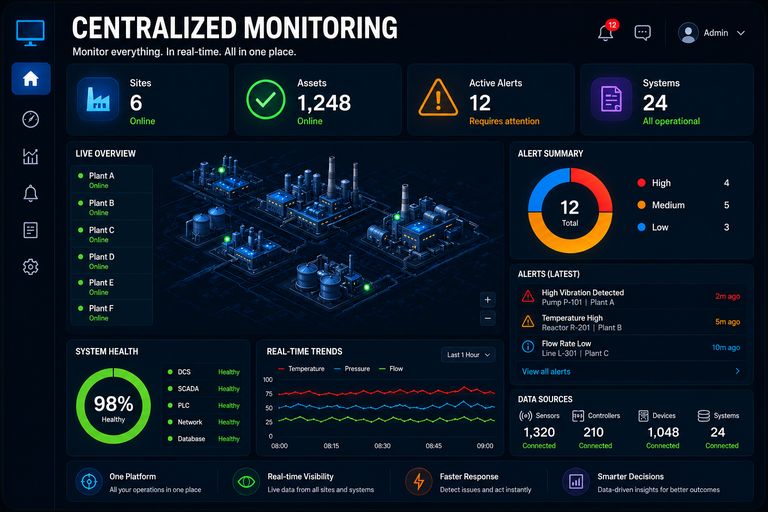
X-IRIS helps businesses identify areas of waste, operational risk, and delay. With real operational data, organizations can make informed decisions to optimize costs, improve performance, and enhance overall operating efficiency.

Evaluate costs against a measured baseline

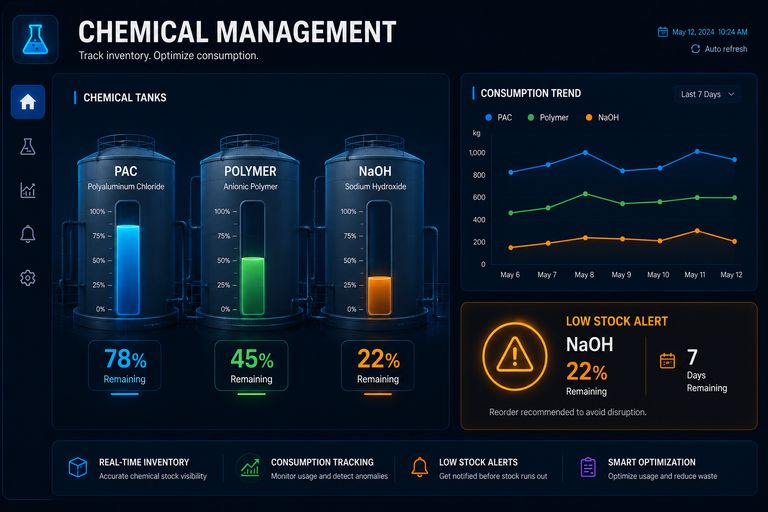
Collect energy use, chemical use, treatment flow and manual work over the same baseline period. Compare influent load, treatment quality and equipment operating modes to identify processes worth assessing.

Savings targets depend on each facility and are checked within an agreed pilot scope. Results from another site do not replace this facility’s baseline and measured outcomes.

Evaluate costs against a measured baseline

REDUCE INCIDENTS AND SYSTEM DOWNTIME

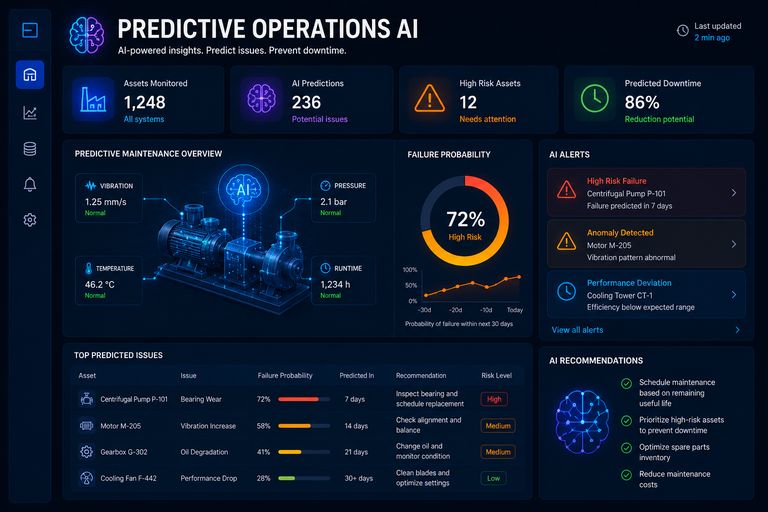
Assess pH, COD, TSS, DO, flow and equipment status using the available measurement sources. Distinguish online measurements, laboratory results and forecasts before configuring alerts.

AI is piloted with suitable data and operator review. Record false alerts, missed events and useful response time; response actions follow approved permissions and procedures.

REDUCE INCIDENTS AND SYSTEM DOWNTIME

Traceable maintenance and recovery workflows

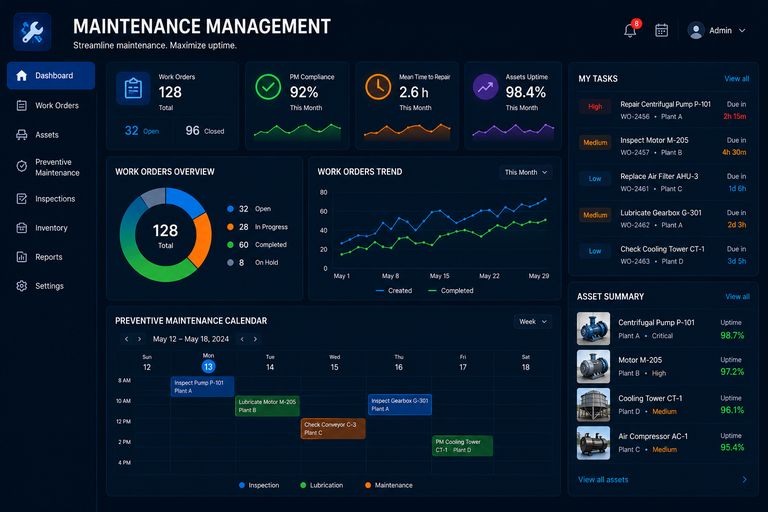
Link equipment identifiers, running hours, maintenance schedules, work orders and handover evidence. Define who receives the task, who checks the work and who authorizes a return to service.

When assessing recovery workflows, agree activation conditions, approval roles, outcome checks and a fallback to manual operation.

Traceable maintenance and recovery workflows

CENTRALIZE MANAGEMENT AND ACCELERATE DECISION-MAKING

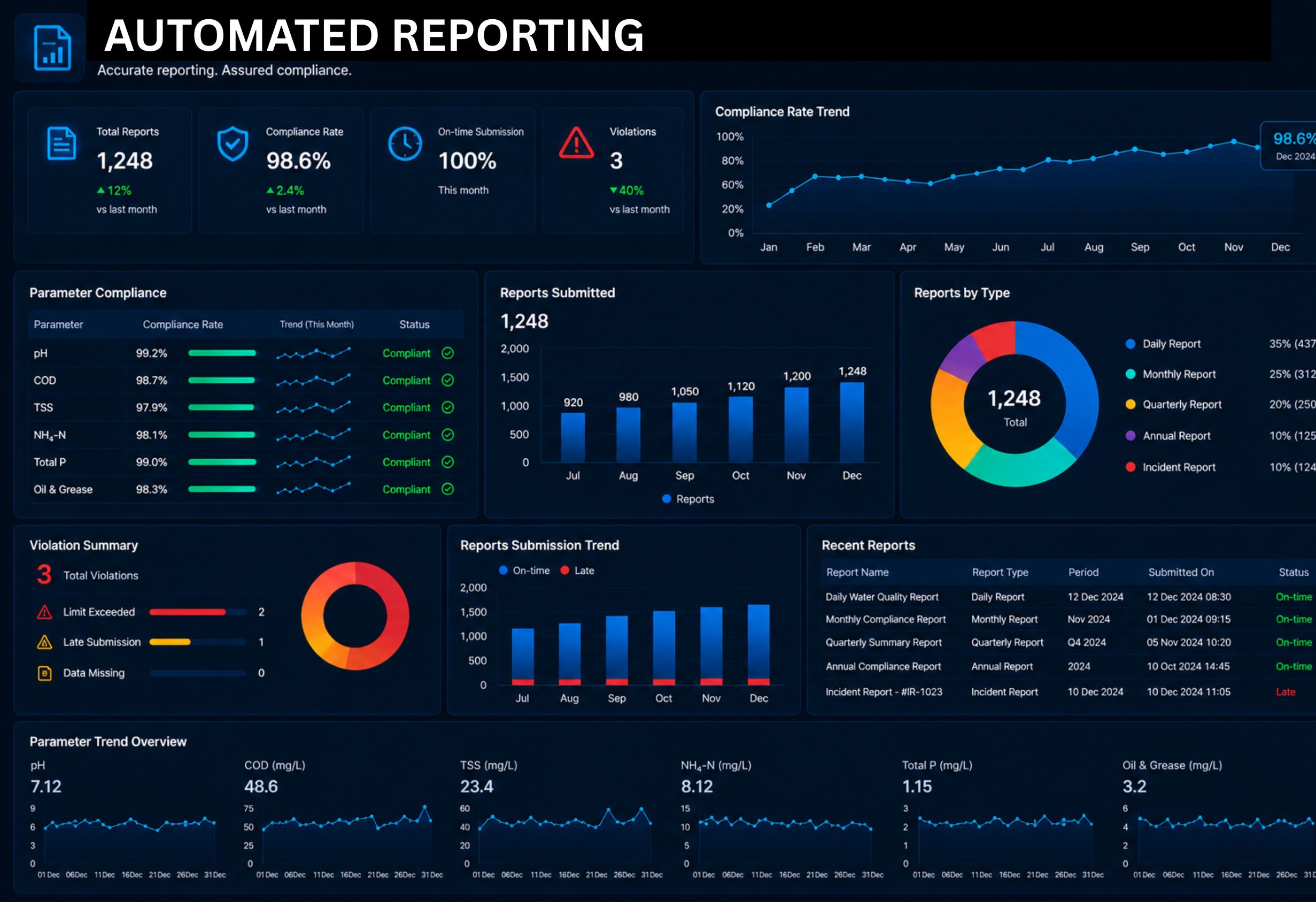
Select the information needed by operators, maintenance teams and managers. Dashboards should show data sources, update times, signal quality and work awaiting confirmation.

Assign viewing, action and reporting permissions by role. Change logs help review alerts, tasks and decisions during incident analysis.

CENTRALIZE MANAGEMENT AND ACCELERATE DECISION-MAKING

ROI

Build an investment case before estimating ROI

Start with facility costs and data. Financial estimates should distinguish assumptions, deployment costs and measured benefits.

Read the Web-SCADA and AI ROI guide →

IMPLEMENTATION ROADMAP

PHASED DEPLOYMENT ALIGNED WITH YOUR EXISTING SYSTEM

Agree scope, schedule and intervention windows after assessment. Each phase has deliverables to review before proceeding.

01

Assessment and scope agreement

Review the treatment process, PLC/SCADA, data sources and work procedures.

  • Data sources, equipment inventory and information gaps
  • Priority scope, responsibilities and evaluation objectives
  • Connection plan, intervention windows and rollback procedure
02

Connection and data checks

Connect agreed sources and validate them before dashboard use.

  • Signal mapping, units and timestamps
  • Missing data, faulty signals and connection-loss alert checks
  • User accounts, permissions and action logs
03

Pilot against agreed criteria

Pilot the selected dashboards, alerts, maintenance and AI functions.

  • Compare alerts with actual events and operator observations
  • Record false alerts, missed events and useful response time
  • Test approved recovery workflows when included in scope
04

Acceptance and handover

Review results against acceptance criteria agreed before the pilot.

  • Test records, measurements and unresolved issues
  • User documentation, configuration and incident procedures
  • Support scope, backups and expansion plan

COMMON CHALLENGES

The Limitations of Traditional Operating Models

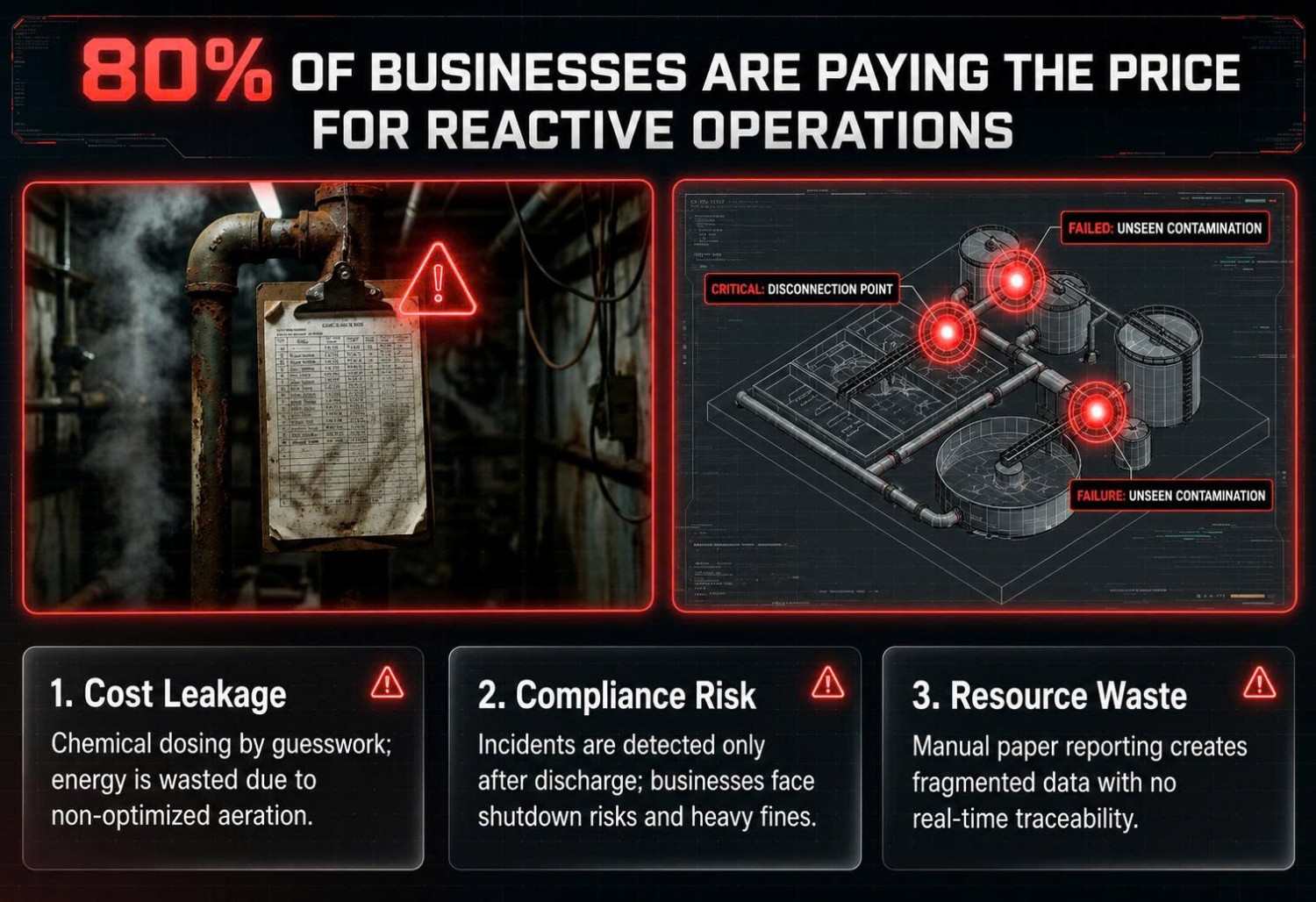
Cost visibility: Separate energy and chemical records make it difficult to compare consumption with treatment flow and operating conditions. Establish a measured baseline before setting savings targets. Incident review: Alerts need data quality checks, clear responsibilities and a record of the response taken. Forecasts require a pilot against actual events. Continuity of work: Equipment history, work orders and handover records help teams retain operational context when personnel change. Reporting evidence: Agree required report fields, source data, approval roles and retention needs with the facility; a dashboard alone does not establish compliance.
Reactive operations model

Operational knowledge

Prepare before implementation

Practical guides to data, equipment and workflows for smart wastewater operations.

View all articles →

READY FOR END-TO-END DIGITAL TRANSFORMATION?

UNLOCK PERFORMANCE. OPTIMIZE RESOURCES.

Book a consultation

Frequently asked questions

Does X-IRIS require replacing existing systems?

The preferred approach is to use existing equipment. X-IRIS reviews the facility’s PLC/SCADA systems, sensors, protocols and access permissions to identify what can connect, what needs adding and the agreed integration scope.

Can X-IRIS connect to PLCs and equipment from different vendors?

Connectivity depends on each facility’s protocols, equipment documentation, signal quality and access permissions. These conditions are reviewed and the selected data sources are tested within the agreed scope.

How does X-IRIS help organizations reduce operational costs?

Web-SCADA helps compare energy, chemicals, flow, running hours and work records to identify improvement opportunities. Savings must be measured against the facility’s baseline and operating conditions; no fixed saving rate applies to every system.

How does AI Predictor work?

AI examines trends and abnormal patterns in operating data. Before using alerts, teams check data quality, compare actual events and evaluate false alerts and missed events. Operators confirm actions under the approved response workflow.

Can X-IRIS monitor multiple facilities or sites simultaneously?

Multiple sites can be monitored after agreeing network connections, data sources, permissions and alert responsibilities for each station. The scope is confirmed through assessment and testing.

Will implementing X-IRIS disrupt existing operations?

Intervention time depends on the actual equipment, network and connection method. X-IRIS and the facility agree implementation stages, intervention windows, testing and rollback arrangements; uninterrupted deployment is not assumed for every system.

How can we determine if X-IRIS is the right solution for our facility?

Prepare process diagrams, PLC/SCADA and equipment lists, sample data, maintenance records and priority incidents. Assessment helps both teams agree the problem, pilot scope, responsibilities and acceptance criteria before implementation.

Gọi điện thoại Gọi điện
Chat Zalo Zalo
Chat Messenger Messenger