
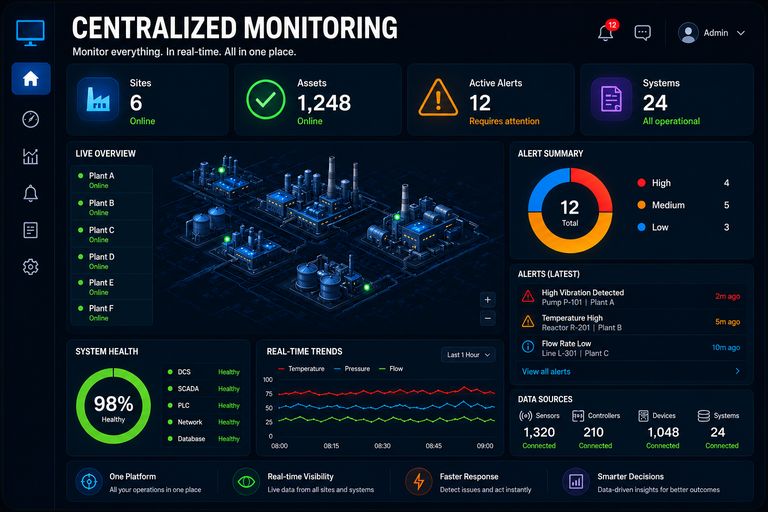

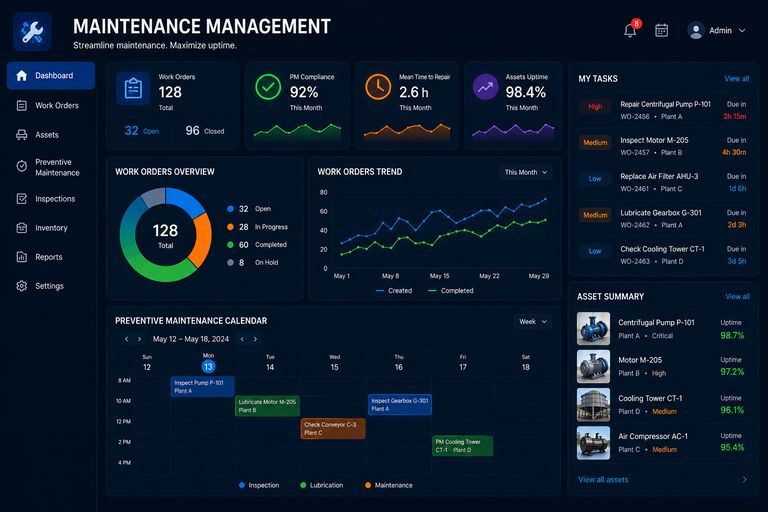
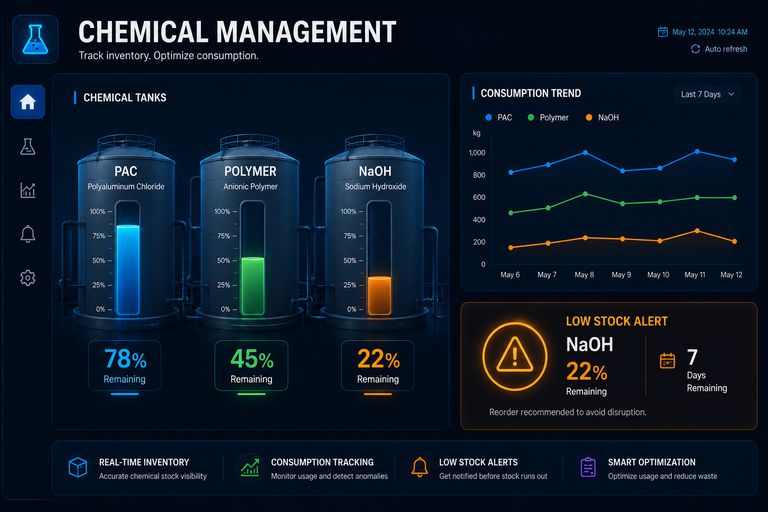
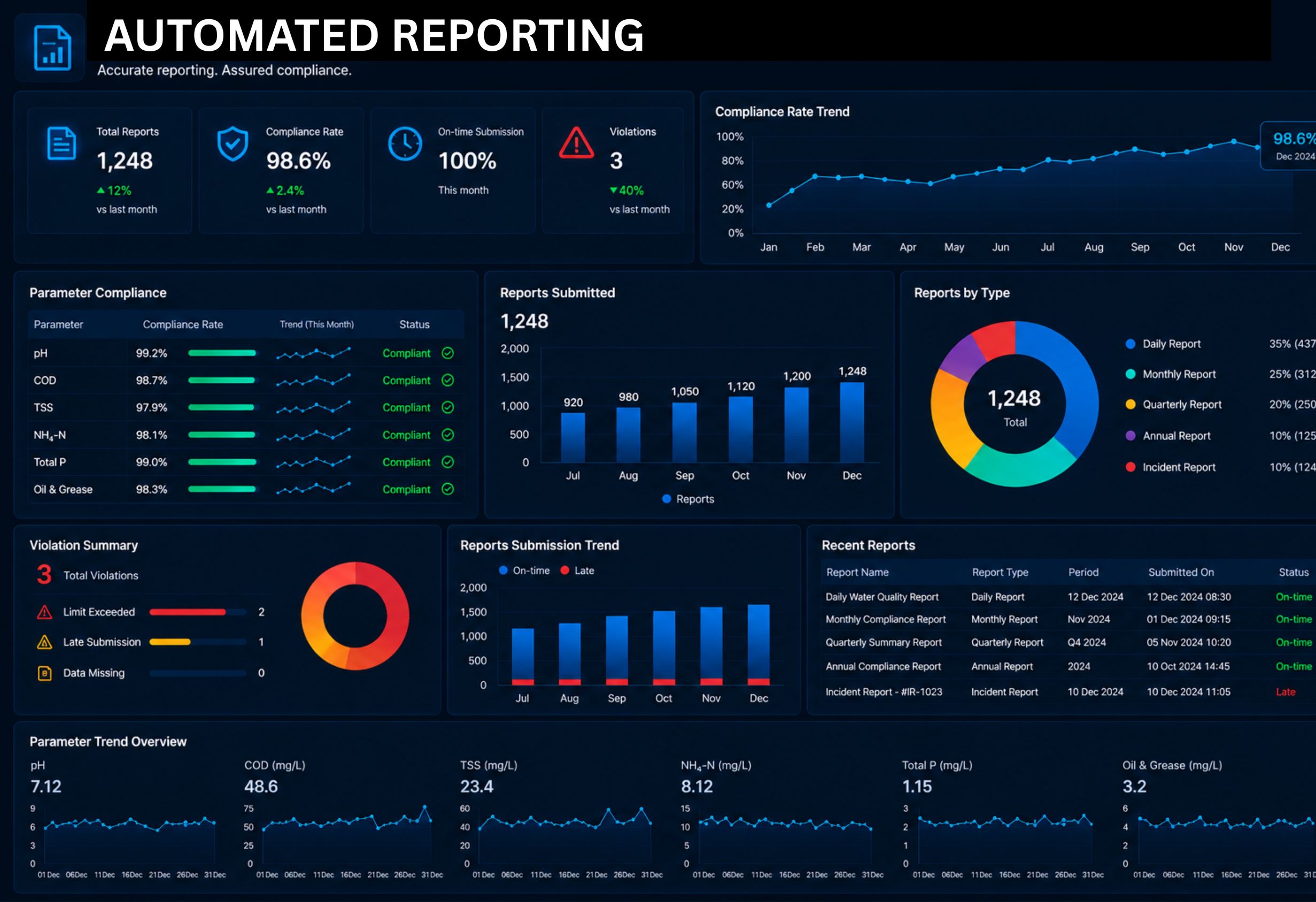

Chemical purchasing, issue from stores and actual process use are different records. Connect them to flow, water quality and operating changes before concluding that dosing or costs have improved.
Reconcile products and stock movements
Keep product identifiers, units, concentration or content and price. Account for opening stock, receipts, returns, transfers and closing stock. Distinguish product-solution mass from active-ingredient mass when reporting both.
Separate settings from verified delivery
A pump setting or control percentage does not automatically prove delivered chemical quantity. Check the measurement or estimation method for the actual equipment and conditions. Preserve its source and uncertainty alongside reported consumption.
Compare like periods and conditions
Use consistent products and units for consumption per treated volume. Check influent, operating mode and treatment results. Separate price changes from consumption changes: a lower purchase price alone does not show better dosing performance.
Record trials and their approval
The process team defines an appropriate trial, limits, monitoring and return conditions. Record product changes, maintenance and approved adjustments. Check treatment results and missing evidence before standardizing or expanding the proposed approach.
Records to check
| Record group | Evidence to review |
|---|---|
| Product | Identity, unit, concentration and price |
| Use | Stock, issues and verified delivery |
| Outcome | Flow, quality and trial records |
Prepare an assessment with X-IRIS
Bring stock records, product information, dosing equipment details and quality data for comparable operating periods. Review the implementation roadmap and request an assessment to agree a scope that can be tested.