
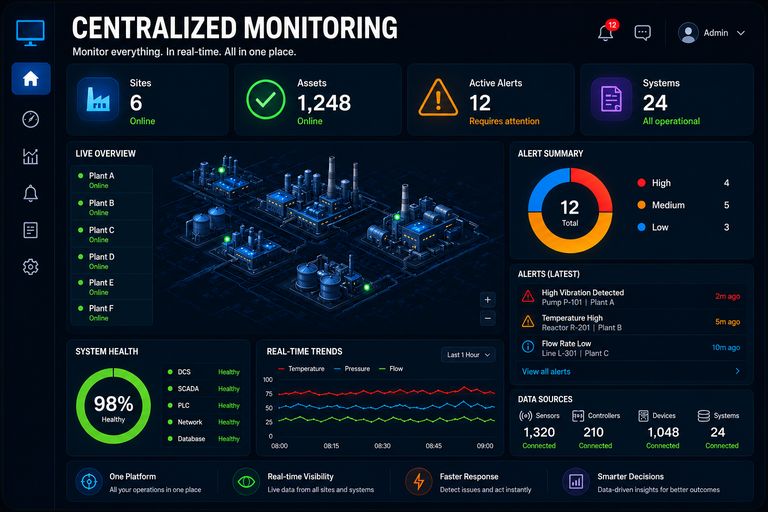
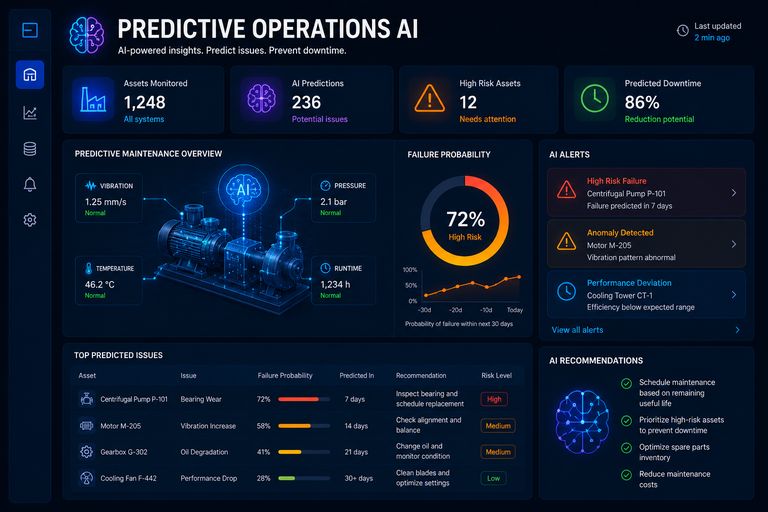
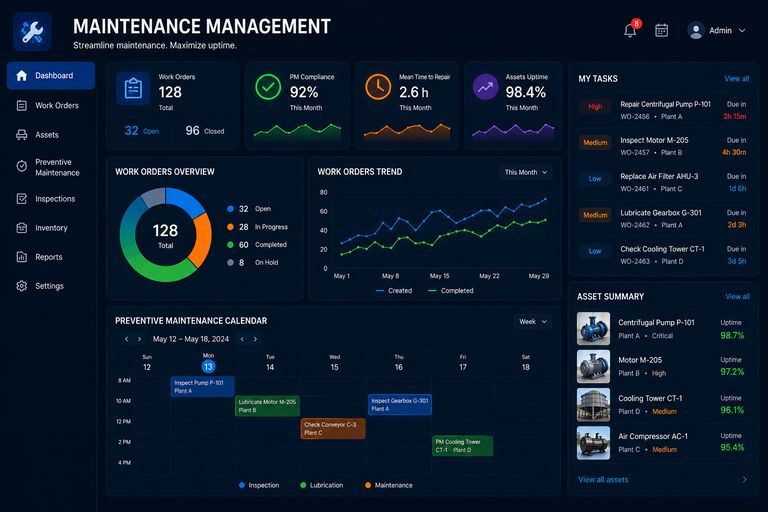
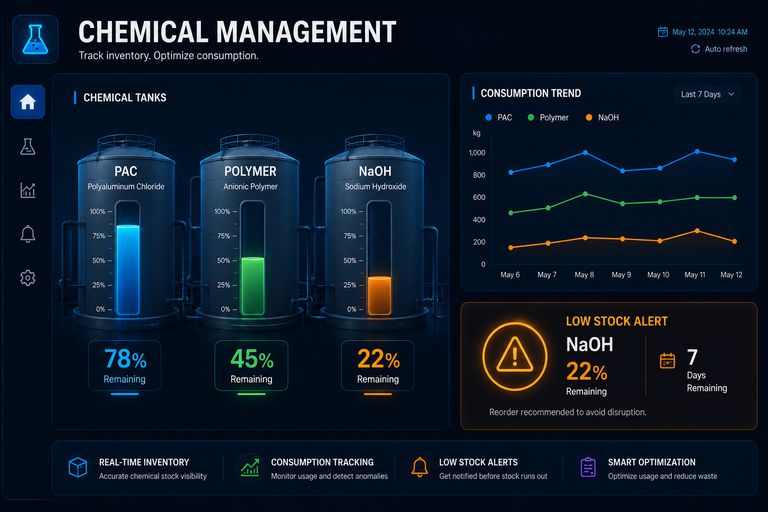
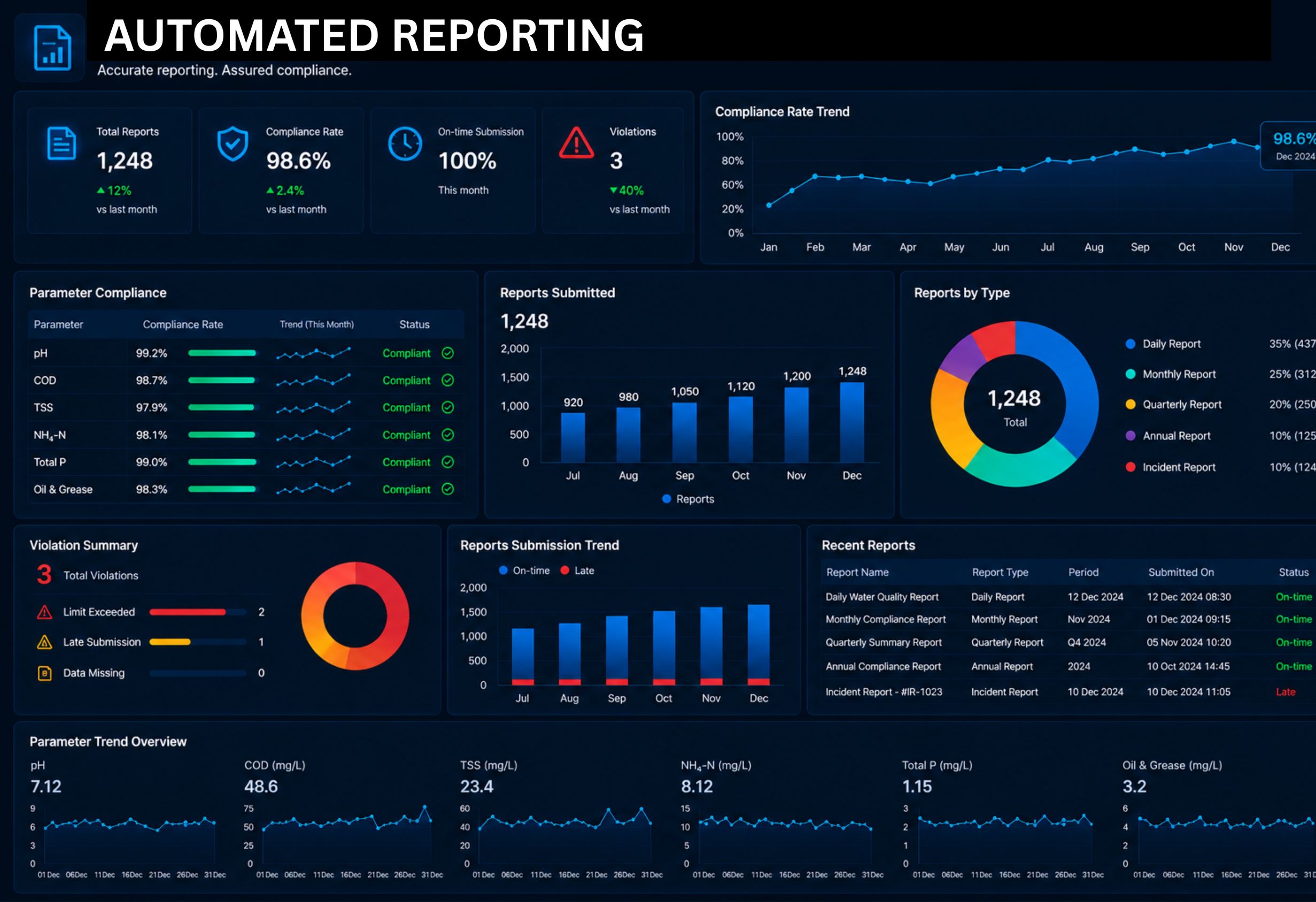

A historian stores operational records over time. Design it around incident review, reporting and data analysis, with explicit rules for what is retained and how missing or revised records are handled.
Choose records from operational questions
An explanation of a pump stop may need equipment state, mode, alarms and work history as well as flow. Laboratory records need sample context. Define the sources required for the decisions the facility wants to support.
Agree recording rules for each signal group
Separate read frequency, storage frequency and change-triggered recording. Select them according to the phenomena to observe and device capability. Test whether short events or small changes needed for analysis are retained.
Preserve gaps and explain aggregation
Missing readings should remain identifiable. Keep original records when producing interpolated or converted data. Agree timezone, shift boundaries and aggregation methods; show valid-data coverage when presenting daily or monthly figures.
Verify backup and recovery
Estimate storage from actual record rates, events, indexes and backups. Agree retention with the owner. Test restoration in a suitable environment and compare records and timestamps. Verify local buffering and replay limits on the selected architecture.
Records to check
| Record group | Evidence to review |
|---|---|
| Measurements | Values, units, time and quality |
| Equipment and events | State changes and acknowledgements |
| Manual or lab records | Source, revisions and approver |
Prepare an assessment with X-IRIS
Bring a signal inventory, representative recording rates, reporting periods and backup or recovery requirements. Review the implementation roadmap and request an assessment to agree a scope that can be tested.