

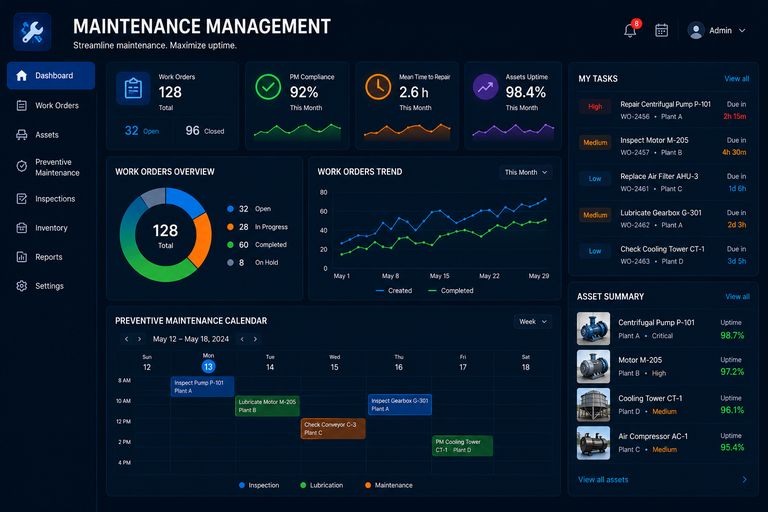

A maintenance workflow links equipment records, operating hours, schedules and evidence of completed work. Begin with important wastewater pumps, blowers or instruments and agree how a task becomes verified rather than merely marked complete.
Create a usable asset register
Record equipment identity, location, function and operational importance. Link relevant tags and documents. Keep maintenance instructions and agreed inspection intervals with the asset instead of relying on an isolated spreadsheet.
Choose triggers and assign responsibility
Use the available running hours, calendar rules and confirmed condition information within the approved maintenance policy. Define who receives, prioritizes and schedules each task. Flag missing hour data rather than treating it as zero.
Keep evidence through the work order
Record the reason, responsible person, materials, actions and inspection results. Link abnormal operating events to the work. Preserve photographs or other evidence when included in the plant's process, with appropriate access permissions.
Verify handover and review repeated faults
Define who accepts the work and authorizes return to service. Track overdue or unresolved tasks separately from completed work. Review recurring failures and incomplete handovers before expanding the workflow to more equipment.
Records to check
| Record group | Evidence to review |
|---|---|
| Asset | Identifier, importance and instructions |
| Task | Trigger, owner, schedule and materials |
| Handover | Inspection evidence and approval |
Prepare an assessment with X-IRIS
Bring the asset list, schedules, running-hour sources and representative maintenance and handover records. Review the implementation roadmap and request an assessment to agree a scope that can be tested.