
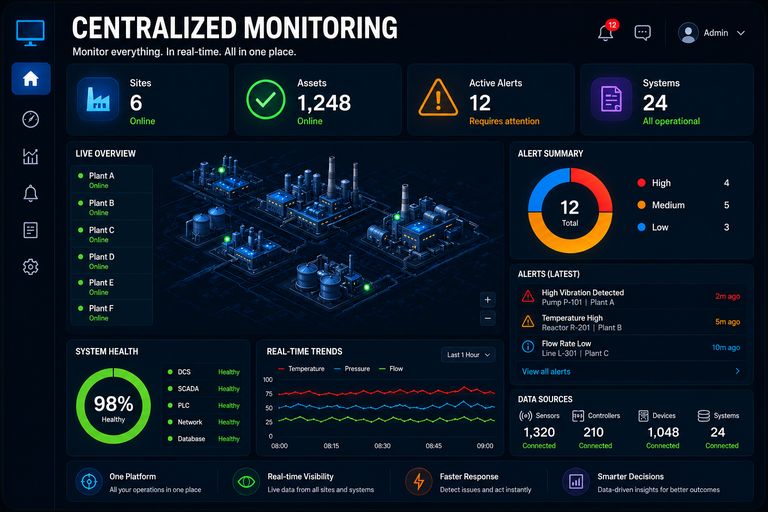
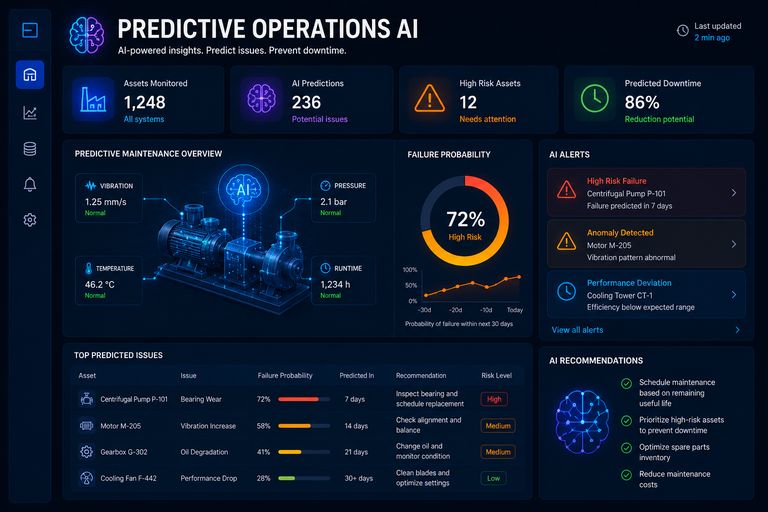
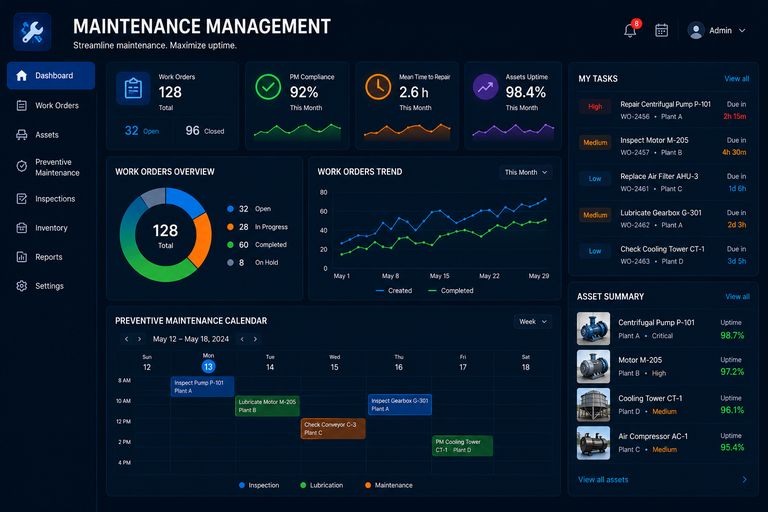
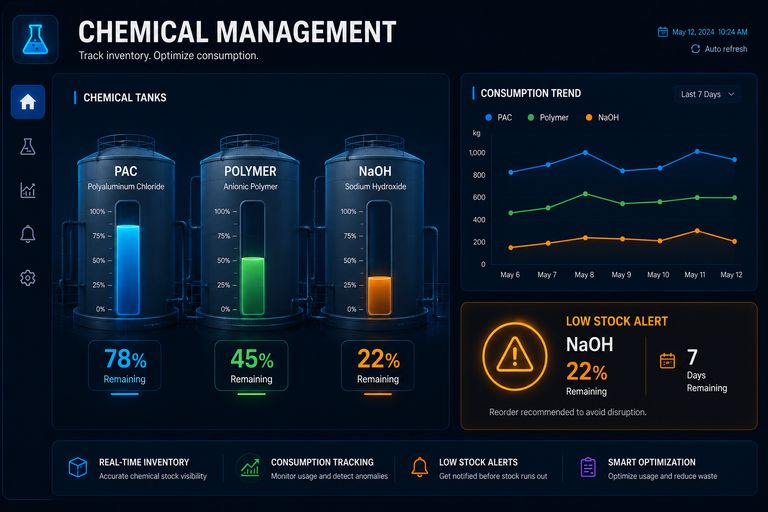

Recovery workflows connect detection, verification, approved action and confirmed outcome. Monitoring and AI can support this sequence, while the extent of automation depends on the plant's operating conditions and approved engineering scope.
Define the recovery scenario
Select a specific event, affected equipment and intended outcome. Identify who verifies the event and which evidence is required. Separate an alert, a suggested response and an automatically executed action.
Verify conditions before acting
Check source quality, process context and field observations according to the approved procedure. Review local mode, maintenance state and plant interlocks when actions involve equipment. Define reasons to stop or seek further approval.
Bound the action and retain a fallback
The engineering team defines permitted actions, roles, limits and return conditions. A read-only or operator-approved pilot may be appropriate first. Test representative scenarios in a suitable approved environment before authorizing automatic execution.
Confirm the result and learn from the event
Compare post-action readings and field checks with the agreed outcome. Log event, approvals, commands, feedback and remaining work. Review failed or uncertain outcomes and revise the scenario with the responsible team.
Records to check
| Record group | Evidence to review |
|---|---|
| Detection | Event and trustworthy source |
| Action | Approved scenario, conditions and roles |
| Outcome | Verification, fallback and review record |
Prepare an assessment with X-IRIS
Bring operating procedures, incident records, control conditions and the recovery scenario to be evaluated. Review the implementation roadmap and request an assessment to agree a scope that can be tested.